How is overtime reported on the W-2? What changes for tax year 2026
Starting with tax year 2026, overtime is reported on the W-2 in two places.
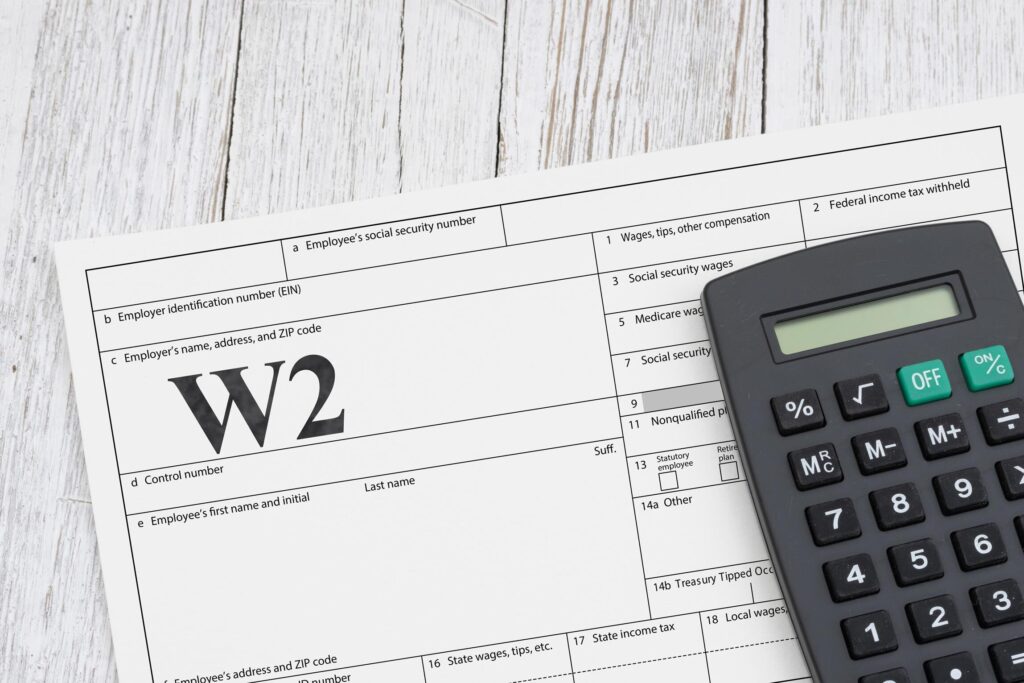
Starting with tax year 2026, overtime is reported on the W-2 in two places. Total overtime wages still appear in Box 1 with all other taxable pay, while the premium portion of FLSA-required overtime, the “half” in time-and-a-half is reported separately in Box 12 under new Code TT. That Code TT amount, called qualified overtime compensation, is what lets employees claim the federal overtime deduction on W-2s issued in January 2027.
That one new code is the visible tip of a much larger compliance change. Under the One Big Beautiful Bill Act (OBBBA), employees can deduct up to $12,500 in qualified overtime from their federal taxes, but only if their employer’s payroll system has been tracking the right number all year. Here’s exactly how overtime is reported on the W-2, what changed from 2025, and how to make sure your number is right before tax season.
Where does overtime appear on the W-2?
Overtime pay shows up in two places on tax year 2026 W-2:
| W-2 Location | What’s Reported | Example: $300 in overtime pay |
|---|---|---|
| Boxes, 1, 3 and 5 | Total overtime wages, combined with all other taxable compensation | Full $300 included in wage totals |
| Box 12, Code TT | Qualified overtime compensation only: the FLSA required premium portion | $100 (the 0.5x premium) |
Nothing moves out of Box 1. Overtime remains fully taxable wages for withholding, Social Security, and Medicare purposes. Code TT is an informational entry that tells the employee and the IRS how much of those wages qualify for the federal overtime deduction.
What is Box 12, Code TT?
Box 12, Code TT reports an employee’s total qualified overtime compensation for the year: the amount eligible for the “no tax on overtime” deduction created by the OBBBA.
The critical detail is that Code TT is not total overtime pay. It’s only the premium required by the Fair Labor Standards Act (FLSA), the extra 0.5x above the employee’s regular rate.
Here’s the math. Say an employee earns $20 per hour and works 10 overtime hours in a week:
- Total overtime pay: 10 hours × $30 (time-and-a-half) = $300
- Regular-rate portion: 10 hours × $20 = $200
- Premium portion: 10 hours × $10 = $100
Only that $100 counts toward Code TT. If this employee worked the same schedule all year, their W-2 would show roughly $5,200 in Code TT while their Box 1 wages would include the full $15,600 in overtime pay.
And not every kind of overtime qualifies. Overtime required only by state law, a collective bargaining agreement, or a voluntary company policy is excluded, a distinction we’ll break down below, because it’s where most payroll systems get the number wrong.
Why the W-2 changed: the One Big Beautiful Bill Act
The One Big Beautiful Bill Act, signed into law on July 4, 2025, created a temporary federal deduction for qualified overtime pay. For tax years 2025 through 2028, employees can deduct up to $12,500 in qualified overtime premium ($25,000 for married couples filing jointly) on their federal return, with phase-outs beginning at higher incomes.
One misconception worth clearing up with your employees now, before W-2 season: “no tax on overtime” does not mean tax-free paychecks. Qualified overtime is still subject to federal income tax withholding, Social Security, and Medicare taxes throughout the year. The benefit arrives when the employee files their return and claims the deduction. Box 12, Code TT is what tells them the exact amount they’re entitled to claim.
That’s the whole reason the reporting requirement exists. Without a reliable number from the employer, employees can’t easily claim a deduction Congress gave them, and the IRS can’t verify the amounts being claimed.
2025 vs. 2026: transition relief is over
If you issued W-2s last January without a Code TT entry, you weren’t behind, you were operating under transition relief. That relief does not extend to 2026.
| Requirement | Tax year 2025 (W-2s issued Jan 2026) | Tax year 2026 (W-2s issued Jan 2027) |
|---|---|---|
| Separate overtime reporting | Optional under IRS transition relief | Mandatory |
| Where reported | Box 14 or separate statement (encouraged but not required) | Box 12, Code TT |
| Penalty exposure for not reporting | Waived under IRS Notice 2025-62 | Standard information-return penalties apply |
| How employees claimed the deduction | Calculated it themselves from pay records under IRS Notice 2025-69 | From the Code TT amount on their W-2 |
| Filing deadline | February 2, 2026 | February, 1, 2027 |
The IRS finalized the 2026 Form W-2 and its General Instructions for Forms W-2 and W-3 in January 2026, making Code TT a defined, required field. The same form revision adds Code TP for qualified tips and new Box 14b tipped-occupation codes so employers with tipped staff have several new fields in the same filing season.
Two practical implications follow from Code TT being an annual total:
- The tracking obligation started January 1, 2026, not at year-end. A payroll system that only begins isolating the FLSA premium in Q4 will produce a wrong number, because the first three quarters of premium were never captured separately.
- Retroactive cleanup is hard. Rebuilding a year of premium calculations from raw time records across rate changes, bonuses, and multi-state hours is exactly the kind of project you don’t want to start in December. Our year-end taxes resource guide covers the rest of the January filing stack.
Fingercheck customers don’t have this gap: the platform calculates and isolates the FLSA overtime premium automatically on every pay period, so the year-to-date Code TT amount already exists in the system rather than needing to be reconstructed.
FLSA overtime vs. state overtime: why only part of your overtime qualifies
The overtime deduction applies only to overtime the FLSA itself requires: hours over 40 in a workweek for non-exempt employees, paid at time-and-a-half. Overtime that exists for any other reason is excluded from Code TT, even though you still legally owe it:
- State-mandated daily overtime. California requires overtime after 8 hours in a day; Colorado after 12; Alaska and Nevada have their own daily rules. An employee who works four 10-hour days in California earns 8 hours of state daily overtime but zero FLSA overtime, because they never crossed 40 hours in the week. None of that premium goes in Code TT.
- Collective bargaining agreement overtime. Union contracts that trigger overtime earlier or at higher multipliers create premium pay the FLSA doesn’t require.
- Voluntary policy overtime. Paying time-and-a-half after 35 hours, or double-time on Sundays, is generous and not FLSA-mandated.
This is the calculation most likely to break in software that treats all overtime as one bucket. The system has to classify each overtime hour by the type of overtime, then isolate the premium on only the FLSA-required hours. For businesses with employees in multiple states, the same weekly schedule can produce different qualified amounts depending on where the hours were worked. Our multi-state payroll guide covers why location drives so much of this.
Fingercheck calculates FLSA and state overtime as separate rules applied to the same time data. The premium that flows to Code TT includes only the federally required portion even when multi-state crews run in a single payroll cycle with taxes calculated by location.
Why hourly and multi-rate teams have the hardest version of this
For a salaried exempt office team, Code TT is a non-event, meaning no FLSA overtime, so nothing to report. For businesses running hourly crews, it’s where the real compliance work lives, because the FLSA premium calculation compounds.
- Multiple pay rates. An employee who works two roles at two rates has a blended “regular rate” that changes week to week and the 0.5x premium is calculated on that blended rate, not either base rate.
- Shift differentials and non-discretionary bonuses. Both must be folded into the regular rate before the premium is calculated. A $100 weekly attendance bonus raises the qualified premium on every overtime hour that week.
- Salaried non-exempt employees. Overtime eligibility follows FLSA classification, not pay structure. A salaried non-exempt employee’s overtime premium belongs in Code TT, which is one of the most commonly missed cases.
This is why Code TT is a payroll-and-time-tracking problem, not a form problem. The number on the W-2 is only as accurate as 52 weeks of premium calculations behind it.
Fingercheck was built for this workforce. The platform’s time tracking flows hours directly into payroll, calculates the FLSA premium on the true regular rate each pay period; differentials and bonuses included and prints Box 12, Code TT on every W-2 that requires it. The reporting is part of the core plan, not a paid add-on, and if a question comes up during filing season, a payroll expert answers the phone in under 60 seconds.
How to audit your qualified overtime number before January
Don’t wait for the W-2 preview in December to find out whether your system has been tracking this correctly. Here’s a five-step audit you can run now:
- Pull a year-to-date qualified overtime report. Ask your payroll provider for the YTD FLSA premium amount per employee. If they can’t produce one or can only show you total overtime pay then the premium isn’t being isolated, and you have a gap dating back to January 1.
- Spot-check the math on one complex employee. Pick someone with multiple rates, a differential, or a bonus. Recalculate one week’s premium by hand and compare. If the system used a base rate instead of the blended regular rate, every week is off.
- Verify state overtime is excluded. If you have employees in daily-overtime states, confirm the report distinguishes FLSA hours from state-only hours. A California crew’s number that looks “high” is the tell.
- Check your salaried non-exempt roster. Confirm every salaried non-exempt employee has overtime premium tracking enabled, not just your hourly staff.
- Request a sample W-2 with Code TT populated. Seeing the box filled in with a real number, before year-end, is the only way to confirm everything and it’s a reasonable ask of any provider.
Then tell your employees what’s coming. A short note explaining the new box and that their paychecks won’t change, it prevents a wave of January questions and helps them claim the deduction they’re owed.
The First W-2s With Code TT Arrive January 2027
Fingercheck tracks the FLSA overtime premium automatically all year, so Box 12, Code TT is already right when your W-2s print.
W2 FAQs
The bottom line on W-2 overtime reporting
How overtime is reported on the W-2 changed for a simple reason: employees can’t claim a deduction they can’t measure. But the burden of measuring it falls on employers, specifically, on payroll and time tracking systems that must separate the FLSA premium from every other kind of overtime, every pay period, all year.
If you’re not certain your system has been doing that since January, the time to find out is now, not when the W-2s print.
This article is general information, not tax or legal advice. Consult a qualified tax professional about how the One Big Beautiful Bill Act applies to your specific business.